Offices and mixed-use buildings
Ventilation issues are often reported as uneven comfort, stale air, or areas that feel crowded even at normal occupancy.
Blog
Commercial ventilation problems are rarely described in technical terms by the people who feel them. Tenants say the building feels stale. Facility teams say support spaces run hot. Property managers say complaints keep returning. Those are all ventilation signals.
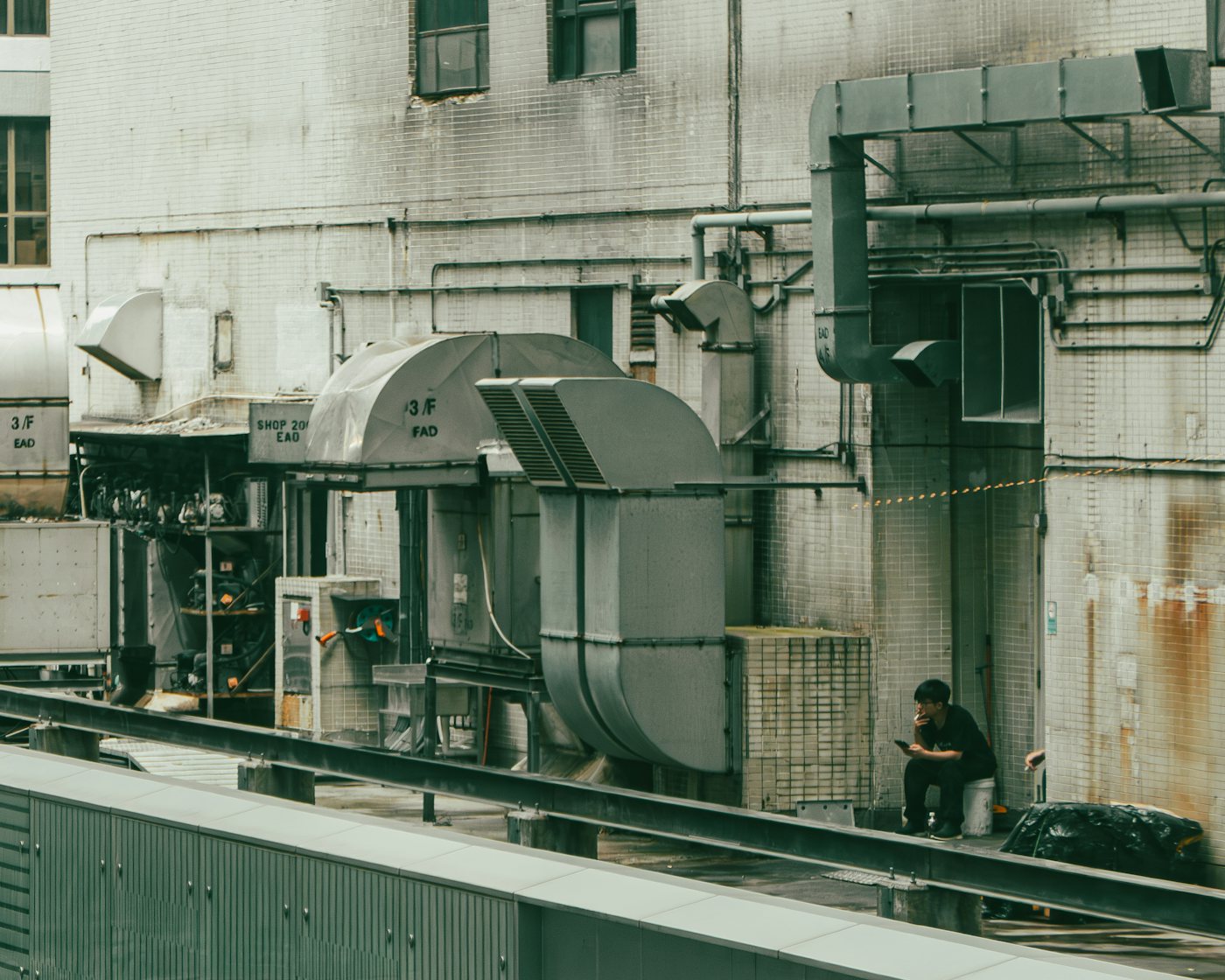
Commercial ventilation problems usually surface through operational language, not engineering language. Office tenants talk about stuffy floors. Hotel teams talk about service areas that never seem to clear. Property managers hear about stale corridors, dirty grilles, and support spaces that feel warmer than they should. All of those complaints point back to how the building is moving, exhausting, and circulating air.
That is why commercial ventilation deserves its own content layer. In B2B environments the problem is not only comfort. It affects building perception, maintenance workload, scheduling, and sometimes safety in laundry, utility, or service areas. The right response is often broader than a single duct run and more operational than a generic residential explanation.
Ventilation issues are often reported as uneven comfort, stale air, or areas that feel crowded even at normal occupancy.
Common corridors, shared laundry areas, and support rooms usually reveal poor airflow before management sees the full pattern.
Guest comfort and back-of-house continuity both depend on ventilation that keeps service areas predictable and workable.
Managers need recurring solutions because the same complaint can appear across multiple assets when maintenance stays reactive.
Commercial ventilation problems are often repetitive. Dirty grilles and vents reduce airflow. Shared common areas feel stale. Laundry or utility spaces trap heat. Exhaust-related sections underperform. Service rooms stay warmer than the building team expects. The problem may not stop operations completely, but it gradually lowers comfort and raises the number of recurring complaints.
Corridors, lobbies, and shared rooms can feel heavy when the building is not clearing or circulating air well enough.
Laundry, utility, and service areas often run hotter when exhaust-related airflow is dirty or restricted.
Loaded grilles and vents can make the building look neglected and often point to a wider maintenance gap.
When the same floors or areas keep generating tickets, ventilation performance is often part of the story.
In commercial buildings, ventilation problems matter because they consume staff time. Operations teams revisit the same complaints. Property managers coordinate repeated vendor visits that do not change the baseline. Tenants or occupants begin describing the building as stale, dusty, or difficult to occupy comfortably. In hospitality and multifamily settings, support-space performance becomes part of the broader service experience.
That is why ventilation maintenance works best when it is structured. Commercial properties need scheduling windows, clear scopes, and repeatable service logic. A one-time reaction to one hot room or one dirty grille usually does not solve the larger problem. A planned ventilation-cleaning path is more effective because it deals with the shared-airflow layer of the building instead of only the loudest symptom.
Comfort complaints shape how occupants judge the building, even when the issue is really tied to maintenance and airflow rather than temperature alone.
Recurring tickets consume engineering and vendor time when the ventilation baseline has not actually been restored.
Hotter laundry, utility, and support spaces become harder to operate predictably when exhaust-related sections are underperforming.
Buildings perform better when ventilation care is scheduled, documented, and tied to the way the property is actually used.
Most commercial properties move through the same progression when airflow issues are left unresolved.
One corridor, one utility room, or one support space starts feeling stale or hotter than expected.
Visible dirt and weak airflow at common ventilation points signal that the maintenance baseline is slipping.
The issue spreads from one tenant or staff complaint into a building-level pattern that is harder to dismiss.
Teams start chasing symptoms, but the building still lacks a clear ventilation-maintenance path.
At that stage the property usually needs planned ventilation cleaning, not another isolated response.
This article is informational first, but the practical next step often points to ventilation cleaning. That service exists for buildings dealing with stale shared airflow, dirty ventilation points, weak exhaust-related behavior, or support areas that are no longer performing well. It is especially relevant when the issue extends beyond a single HVAC duct complaint and clearly affects building operations.
For facility and property teams, the building-specific path is often commercial ventilation cleaning. That page focuses more directly on maintenance planning, tenant comfort, airflow performance, and operational scheduling. Some issues also overlap with poor ventilation and with broader location content when the property is dealing with Los Angeles dust load on top of building airflow challenges.
If the building complaint is already local, use the city pages below for neighborhood context, commercial building types, and direct service routing. Common searches include ventilation cleaning in Beverly Hills, ventilation cleaning in Manhattan Beach, and ventilation cleaning in Downey.
These questions are common among property managers, building owners, hotel operators, and facility teams reviewing ventilation complaints.
Stale shared spaces and weak airflow are among the most common complaints because occupants feel them before they can describe the technical cause.
Yes. They often indicate a wider maintenance issue affecting airflow behavior and building perception.
Yes. Those spaces often reveal weak exhaust-related performance or broader shared-airflow issues.
Commercial properties have more occupants, more shared spaces, more operational impact, and usually need coordinated maintenance rather than one-off fixes.
When the same airflow or stale-air issues keep returning across tenants, floors, or service areas, the building usually needs structured service rather than more observation.
Yes. That is one of its main values in commercial settings because it improves the baseline for both occupants and operations teams.
Tell us what the building is doing, where the complaint is showing up, and how often it happens. We can help route the scope.